
Blog Post
Why More Summer Miles Don’t Have to Drive Higher Expenses. A Data Perspective.
By Dan Belknap
April 28, 2026
For many fleet managers, summer isn’t just another season, it’s the moment when performance is put to the test. Based on Wheels’ analysis of data from hundreds of thousands of vehicles, vehicle utilization rises sharply across industries, with fleets logging significantly more miles per vehicle each month. For example, our data shows that food fleets can see increases of more than 150 miles per vehicle, while industrial and building services fleets add up to 100 miles, and healthcare fleets add over 80 miles per month.
This surge in demand creates both opportunity and risk. The fleets that perform best during peak season aren’t reacting in real time, they’ve already prepared. And that preparation starts in the spring.
Turning Spring Preparation into Summer Performance
Seasonal transitions create a critical window where the decisions you make now directly impact performance later. Winter leaves behind wear and tear such as strained batteries, worn tires, and stressed brakes, while summer introduces new pressures like heat, higher mileage, and increased utilization.
If maintenance is delayed or missed, the consequences compound quickly:
- Unexpected breakdowns
- Increased downtime
- Higher repair costs during peak demand
Spring should not be treated as routine maintenance; it’s a strategic opportunity to prepare your fleet for the operational intensity ahead.
Proactive maintenance isn’t just about fixing what’s broken, it’s about identifying and addressing issues before they escalate. Fleets that act early can avoid costly disruptions later by focusing on:
- Preventative maintenance: Completing tire replacements, brake inspections, and fluid checks before minor wear becomes major repairs
- Seasonal preparation: Ensuring systems like A/C are ready to support driver comfort and productivity
- Maintenance planning: Identifying upcoming service needs early to schedule work efficiently instead of reacting to breakdowns
While each of these areas plays a role, tires represent one of the most variable and often overlooked sources of summer risk. Tire wear is not uniform across a fleet and assuming otherwise can limit performance and drive up costs. Analysis of Wheels’ internal maintenance data reveals meaningful differences in average mileage between tire replacements across vehicle types, fuel sources, and operating environments, differences that directly shape where maintenance attention should be focused heading into a high-utilization season.
Across the fleet, pickup trucks lead all vehicle types at 51,962 average miles between tire replacements, while SUVs/MPVs and cargo vans follow at 46,689 and 46,539 miles, respectively. Cars and medium/heavy-duty trucks cluster near 44,780 miles, while hatchbacks average just 30,432 miles per cycle — a gap of more than 21,000 miles compared to pickups.
Electric vehicles average 32,780 miles between tire replacements — approximately 30% shorter intervals than their gasoline counterparts — driven by higher torque, increased vehicle weight, and tire design tradeoffs.
Operating environment plays a supporting role as well. Vehicles in tropical and high-humidity climates show median tire life roughly 10,000–15,000 miles shorter than those in temperate environments such as Humid Continental or Humid Subtropical regions. Subarctic climates show the widest variance, reflecting a broader mix of vehicle types and conditions. As summer heat and UV exposure intensify across the southern and western U.S., fleets operating in those geographies face accelerated natural wear, making proactive tire inspection and rotation a higher-priority item, not a routine one.
When fleets take this proactive, well-planned approach to maintenance, they’re better positioned to handle increased summer demand without sacrificing uptime.
From Planning to Execution: Closing the Gap Between Insight and Action
Even when maintenance needs are clear, execution often falls short. Many fleets still rely on fragmented processes: drivers calling shops individually, vehicles arriving without appointments, and service providers lacking insight into required work. The result is avoidable delays, inefficiencies, and downtime. Without a streamlined way to coordinate scheduling and service preparation, even the best maintenance strategies can break down.
Improving coordination between drivers, fleet managers, and service providers is essential to reducing these inefficiencies. When maintenance scheduling is planned and service providers have visibility into upcoming work, fleets can reduce delays, improve turnaround times, and maintain more predictable operations during high-demand periods.
What High-Performing Fleets Do Differently
Our data shows that fleets investing in preventative maintenance are better positioned for peak season. Even as mileage increases, many maintenance and repair categories show lower per-vehicle costs in summer compared to winter. This pattern is consistent across core vehicle types, including SUVs, light trucks, and sedans, which see increased mileage alongside lower costs across multiple maintenance categories.
One example of preventative maintenance that can make a measurable impact is tire rotation: fleet vehicles that received at least one tire rotation before their most recent replacement averaged 53,892 miles between replacements, while vehicles that received no rotation averaged 40,722 miles — a difference of 13,170 miles, or approximately 32% more usable tire life.
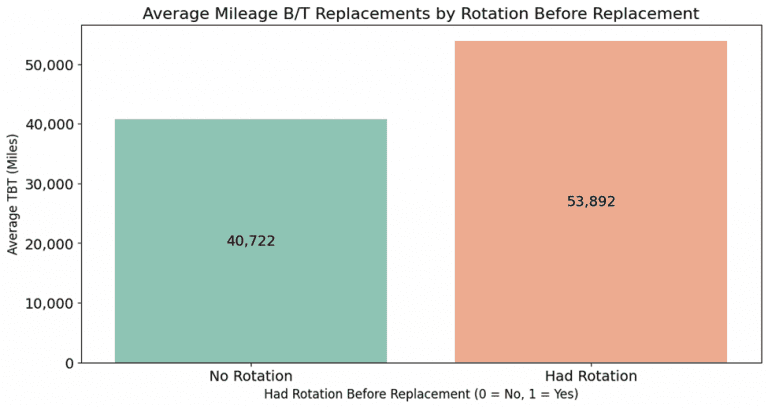
Together, these trends reflect improved operating efficiency, with fleets driving more miles while incurring lower maintenance costs, demonstrating the impact of a well-maintained fleet. The result is that proactive preparation leads to longer vehicle uptime, fewer costly repairs, and smoother operations.
High-performing fleets prioritize both driver experience and operational execution. Drivers spend less time waiting and more time being productive, while fleet teams benefit from improved uptime, reduced administrative burden, and better coordination with service providers.
Ultimately, these fleets enter summer with preventative maintenance completed, streamlined scheduling in place, and minimal unplanned downtime that allows them to meet demand without disruption.
The Bottom Line
Spring is more than a transition; it’s an opportunity. The fleets that act now are the ones that stay ahead when demand peaks. By combining proactive maintenance with smarter scheduling and connected workflows, fleet managers can turn seasonal pressure into a performance advantage. Because when summer hits, preparation isn’t optional; it’s what keeps your fleet moving.
To learn more about Wheels’ analysis on the impact of tire rotation, read the full article.