
September 2025
PRODUCT DRIVEN
Fleet Pulse
From Uncertainty to Resilience: Smarter Cost Planning for Fleets
Fleet managers are no strangers to pressure, but the last five years of challenges have raised the stakes. Supply chain disruptions, fuel price fluctuations, and rising fleet maintenance costs are creating moving targets for budgets, making it harder than ever to plan for the future.
The good news is that the challenges we have recently experienced and the tools now available allow us to shift from a reactive stance to a proactive one. The new approach to fleet planning should be flexible and adaptable, a strategy that will deliver higher uptime and cost savings in an uncertain environment like today’s.
Market pressures you can’t ignore
Fleet operations feel the weight of today’s macroeconomic environment. Even if you’ve managed through turbulent conditions before, the scale and speed of current shifts make proactive planning more essential than ever. A few external pressures that you shouldn’t ignore include:
- Supply chain disruptions that may require contingency planning as well as building alternative and flexible OEM and sourcing channels.
- Fuel price fluctuations that add uncertainty to forecasting. While the U.S. Energy Information Administration projects a modest decline in gasoline costs through 2026, current prices are already near the lowest margins in the distribution network. Combined with ongoing global geopolitical challenges, certain events could quickly reverse the trend and trigger a steep increase instead.
- Rising maintenance costs, due to increasing vehicle complexity, unscheduled maintenance repairs, and parts delays, can put a strain on budgets and operational efficiencies and result in downtime increases.
For fleet managers, these combined pressures turn cost control into a daily battle. The key is not just recognizing external forces but understanding how they impact your operations so you can plan ahead instead of getting caught by surprise.
Planning for the unpredictable
Traditional budgeting approaches assumed a level of stability that has become less dependable. Annual forecasts that once served as reliable roadmaps can now become outdated within months. Scenario planning offers another approach that may help you stay ahead. By modeling potential outcomes, such as a sudden fuel price spike, a delayed replacement cycle, or rising maintenance costs, you can prepare responses in advance. Instead of reacting when challenges arise, you’ll be ready to act with resilience and foresight.
Modern analytics make this approach even more effective. Historical averages often hide real risks, while data-driven insights reveal trends and early warning signs. Combined with scenario planning, these insights give you a forward-looking view that makes budgets more agile and adaptable.
Smarter planning with the right tools
Today’s tools provide insights that evolve with changing conditions that provide more dynamic, data-driven fleet management information.
Within FleetView, you can access two tools that are designed to support this kind of smarter planning. Our Cost Projection Tool uses past operating expense data as a baseline, that lets you run “what if” scenarios across your budget. You can test variables such as replacement cycles, vehicle selections, fuel prices, maintenance costs, and mileage driven to see how different factors might affect your budget. This creates an agile plan that adapts to market swings rather than being thrown off course by them.
Also available is our TCO Calculator, which is built directly into our ordering system. Instead of working with generic benchmarks, the calculator provides insights based on your specific pricing, incentives, and chosen vehicles. This allows you to evaluate how the cost will vary based on the vehicles selected and which ones will meet your operational needs.
With these insights in hand, Wheels can help you navigate today’s cost pressures with the most flexible and creative funding structures in the industry. Whether balancing capital expenditures, offsetting the impact of volatile fuel prices, or adapting to broader market disruptions, our solutions are designed to keep your budget under control and allow you to focus on driving strategy.
Staying ahead in uncertain times
Tomorrow’s challenges will look different from todays, but with the right tools and support, you’ll build the resilience to be ready for them. Contact your account team to learn how Wheels’ fleet expense management solutions can help you predict costs, protect your budget, and drive stronger results for your fleet.
Product Updates
Three new updates have been implemented to U.S. Maintenance Approval:
- Maintenance Approval Links & Vehicle Detail in FleetView Notifications
Purchase Orders pending approval will now generate notifications in FleetView for all levels of approvers. In addition to the link to the Maintenance Approval Page, key details like incident number for maintenance approvals and vehicle book value will be visible as well, making it easier to take action quickly.
- New Functionality & Expanded Visibility in the Maintenance Approval Page
- Previously Approved or Rejected Items: When doing the work on a vehicle, shops may find additional repair needs. With this expanded visibility, you’ll be able to tell what was approved or rejected on the initial purchase order.
- On Hold Functionality: Depending on the nature of repairs, we understand that your fleet may need time to determine whether to approve or reject a maintenance purchase order. With this new functionality, approvers can put purchase orders on hold, set a reminder threshold, and review internally how your fleet wants to proceed with the repairs. With the addition of approval links in FleetView Notifications, your approvers will still have easy access and the ability to see the approval pending during the On Hold period.
- Ask a Question
Approvers can now submit questions directly from the approval page. Whether it’s about a repair detail, vendor clarification, or pricing concern, this feature streamlines communication and helps resolve issues faster—without leaving the workflow.
Fuel Card Cancel and Replace is now automated in FleetView for Wex and Comdata card holders
Fuel Card Cancel & Replace Automation in FleetView makes managing fuel cards faster and easier for WEX and Comdata users. Requests can now be submitted and processed automatically within minutes. These automated requests generate trackable case activity for easy monitoring, and status updates can be checked directly in FleetView.
Redesigned DriverView™ maintenance page provides faster, easier access to key tools and information
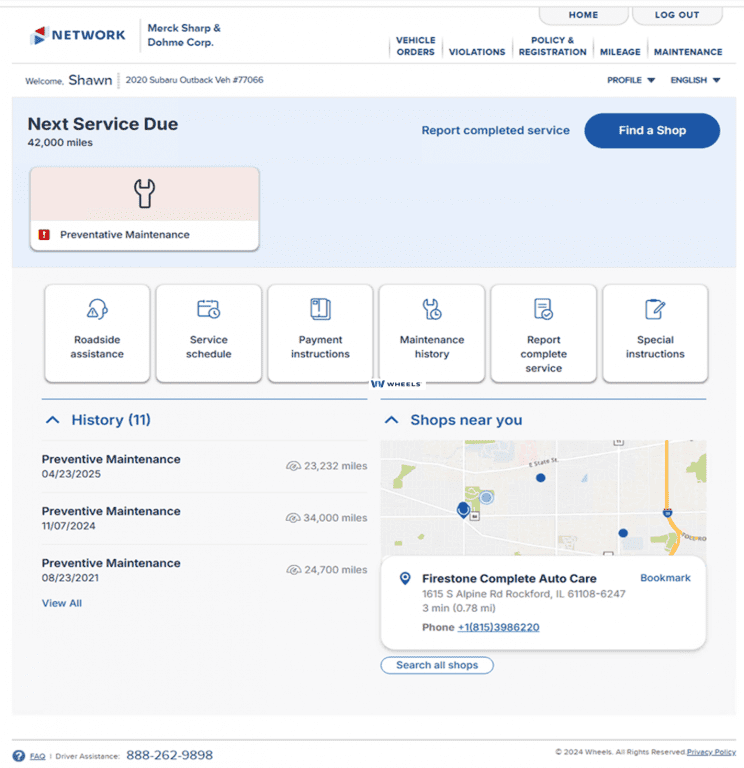
The new DriverView™ maintenance page provides a centralized location where drivers can quickly view their maintenance information and take action as needed. Drivers can now easily access:
- Preventative Maintenance Warnings
- Roadside Assistance
- Service Schedule
- Payment Instructions
- Maintenance History
- Report Complete Service
- Find a Shop Near You
EV home charging reimbursement estimate reports are now available
A new report is now available in your FleetView dashboard for ChargePoint users in the U.S. that provides total home charging reimbursement estimates. This report builds on your existing home charging data by not only showing kWh usage per driver but also estimating reimbursement costs based on state-level electricity rates. You’ll now see:
- Driver-level home charging usage (kWh)
- State-specific electricity rates
- Estimated reimbursement totals (These reimbursement figures are estimates based on average state electricity rates and may not reflect the exact amount a driver should be or was reimbursed)