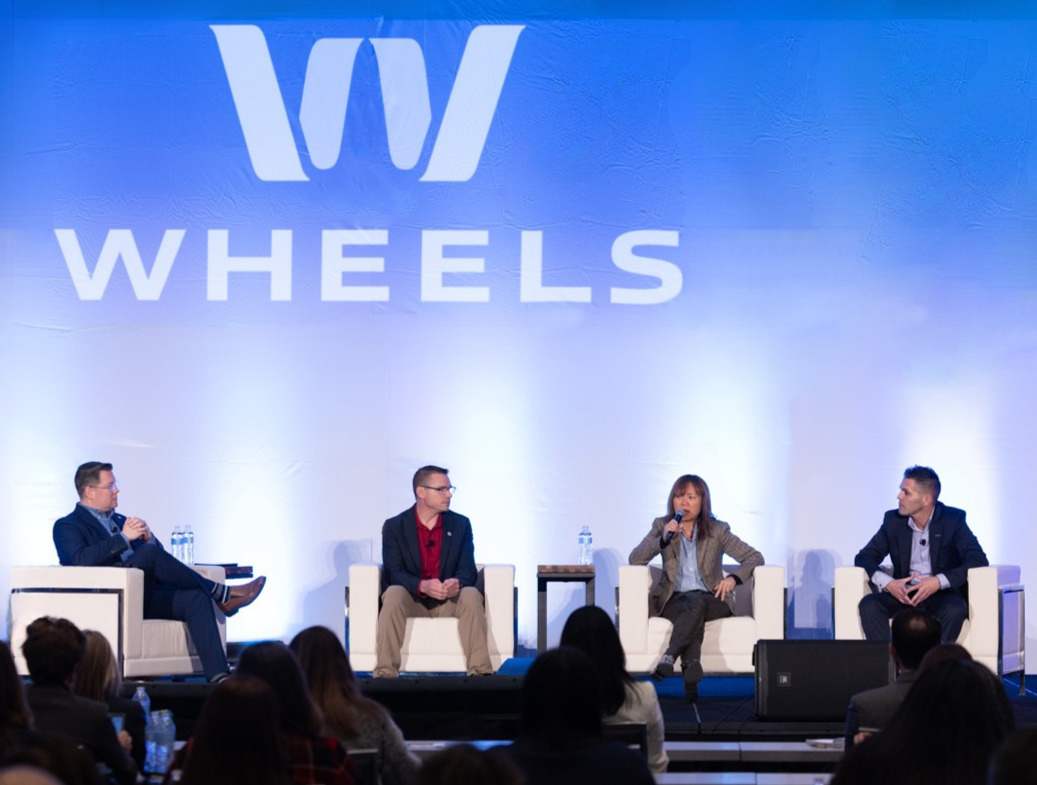
Fleet management has never been more dynamic or more demanding. When I had the opportunity to kick off the Operational Wins: How Fleet Leaders Reclaimed Time & Efficiency panel at our most recent Results+ Performance Summit, I was joined by three leaders who understand that reality firsthand: Mark Peabody, Global Director of Fleet at 3M; Jen VrMeer, Senior Manager of Sales Operations at Becton Dickinson (BD); and Brandon Leonard, Corporate Fleet Manager at HNTB.
Together, the panelists represented healthcare, infrastructure, and global manufacturing. Despite different business models and risk profiles, fleets share the same pressure: do more with less, adapt faster, and keep vehicles moving without losing control.
What emerged from the discussion was not a list of tactics, but a set of shared principles. There was clear alignment on how leading fleets are reclaiming time, driving efficiency, and building resilience. Here are the four key fleet management realities we discussed:
Reality One: Change Is Constant, and Readiness Is the Differentiator
The panel agreed: adaptability is no longer a competitive advantage. It’s table stakes. Whether driven by supply chain disruptions, accelerated timelines tied to infrastructure funding, mergers and acquisitions, or internal restructuring, change has become the default setting for fleet operations.
Across all three organizations, success hasn’t come from trying to eliminate volatility, but from building programs that can absorb it. That starts with strong partnerships, clear governance, and the recognition that fleet teams are rarely staffed to manage disruption manually. Lean teams, compressed timelines, and growing vehicle populations require operating models that scale without adding complexity.\
Our consensus: Change management succeeds when it is intentional, well communicated, and backed by flexible partners. The strongest fleets anticipate disruption and build programs that pivot quickly without compromising driver confidence or operational continuity.
Reality Two: Technology Works When It Makes Life Easier for Everyone
A second area of alignment was technology adoption and compliance. Our fleets panelists consistently achieve mobile app adoption and driver compliance levels well above industry norms, not through mandate alone, but by design.
Drivers are more willing to engage when technology removes complexity from their day, instead of adding to it. Several themes surfaced repeatedly: meet drivers where they are, make tools intuitive, introduce them early, and reinforce them often. New-hire onboarding, ongoing communication, and visible support all help to normalize digital tools as part of everyday work rather than a burden.
Equally important, internal teams must embrace automation just as fully as drivers do. With limited resources and growing demands, efficiency gains increasingly come from behind-the-scenes automation by streamlining reminders, escalations, and reporting so teams can focus on higher-value work.
The single most important point? Technology drives efficiency only when it is simple, consistent, and embedded into daily workflows for both drivers and administrators.
Reality Three: Policy Discipline Enables Speed and Safety
Consistency matters more than perfection. High-performing fleets set clear expectations, communicate them often, and enforce them fairly. When exceptions become the norm, trust erodes, both in the policy itself and in the fleet team responsible for it.
At the same time, effective policies must be grounded in reality. The most successful programs reflect how people actually behave, not how we wish they would behave in a perfect scenario. Simplicity is critical, because overly complex, lengthy policies are far less likely to be read, understood, or followed. When policies become too complicated, organizations risk setting themselves up for frustration, inconsistency, and ultimately poor outcomes.
Strong policy governance also enables speed. When expectations are clear and data-driven, organizations can move faster during periods of change without renegotiating rules at every turn. This becomes especially critical in areas like safety, compliance, and vehicle lifecycle management, where hesitation or inconsistency can quickly drive cost and risk.
Remember that well-governed policies, supported from the top down, create the foundation for both safety and operational agility.
Reality Four: Benchmarking Turns Ideas into Action
The panel also agreed that benchmarking remains an underused fleet tool. Beyond validating performance, it adds context. It helps fleet leaders translate intuition into evidence and proposals into action.
Used effectively, benchmarking supports smarter policy updates, stronger business cases, and faster internal alignment. It helps organizations avoid being first for the sake of novelty or being last because of inertia.
Panelists noted that benchmarking is most valuable when it combines quantitative data with qualitative insight: not just what peers are doing, but how and why. It accelerates decision-making by converting fleet data into organizational confidence.
What Do Winning Fleets Do Differently?
They simplify to succeed. They build clear policies, communicate expectations, use technology as an enabler, and rely on data, benchmarking, and trusted partners to make smarter decisions.
Just as importantly, success compounds. Automation saves time. Time enables better planning. Better planning strengthens compliance. Strong compliance reduces risk and creates more capacity to focus on strategy instead of constant firefighting.
These insights are what made the Results+ Performance Summit so valuable. When fleet leaders share practical solutions, real experiences, and lessons learned, the entire industry benefits.
Reclaiming time and efficiency is not about working harder. It is about working smarter – and learning from one another along the way.