This national leader in infrastructure design and construction operates in a high-stakes environment where timing, compliance, and readiness are critical. From billion-dollar stadiums to major highway and bridge projects, flawless execution is essential including fleet operations.
After the Infrastructure Investment and Jobs Act in 2021, the organization faced a surge in contracts, tighter timelines, and heightened demands. The fleet team had just 30 days to source and deploy compliant, road-ready vehicles, a challenge that required more than speed. It demanded strategic reinvention.
Scaling smart: a strategy for acceleration
Partnering with Wheels, this client streamlined operations to enable scalable growth by consolidating vendors, standardizing sourcing, and aligning upfit and registration plans with project timelines. The strategy emphasized rapid, compliant acquisitions for project-based orders, whether vehicles were bound for airports, highways, or construction sites. Success relied on strong relationships with dealers, upfitters, and manufacturers, and close coordination with Wheels and vendors to guide each project from start to finish.
Safety was equally critical. They embedded a safety culture into its fleet policy through continuous MVR Monitoring, a driver point scale, and comprehensive training. Full telematics coverage across all vehicles further strengthened safety and supported cost control.
From expansion to optimization
The transformation delivered faster deployments, fewer delays, and a fleet built for growth without sacrificing compliance or driver safety. Despite a 25% increase in inventory, they controlled costs, achieving a drop in maintenance spend and limiting fuel cost growth.
Fuel efficiency improved significantly: miles driven rose 22.5% to 12.7 million, yet fuel spend increased only 2.5%. Average fuel economy and per-vehicle fuel costs fell 16%, driven by a broader vehicle selector and guidance toward efficient options.
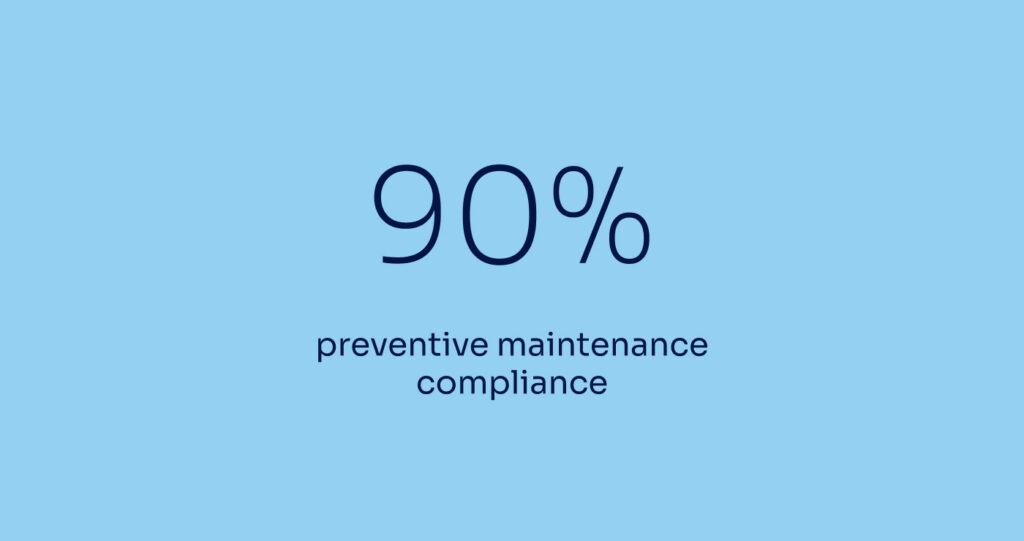
With a 39% increase for in-network utilization, nearly 90% of repairs were completed at National Account and MAP Advantage shops, generating $225,000 in savings, cutting repair spend by 15.5%. Out-of-network repairs were held to 6% through proactive maintenance compliance for their decentralized fleet.
Remarketing also excelled, with over 100 units selling at 125% of fair market value, underscoring disciplined asset management, strict replacement policies and forward-thinking fleet strategy.
The company’s results prove what’s possible when fleet operations are treated as a core business function. Delivering efficiency, cost control, and industry-leading performance.