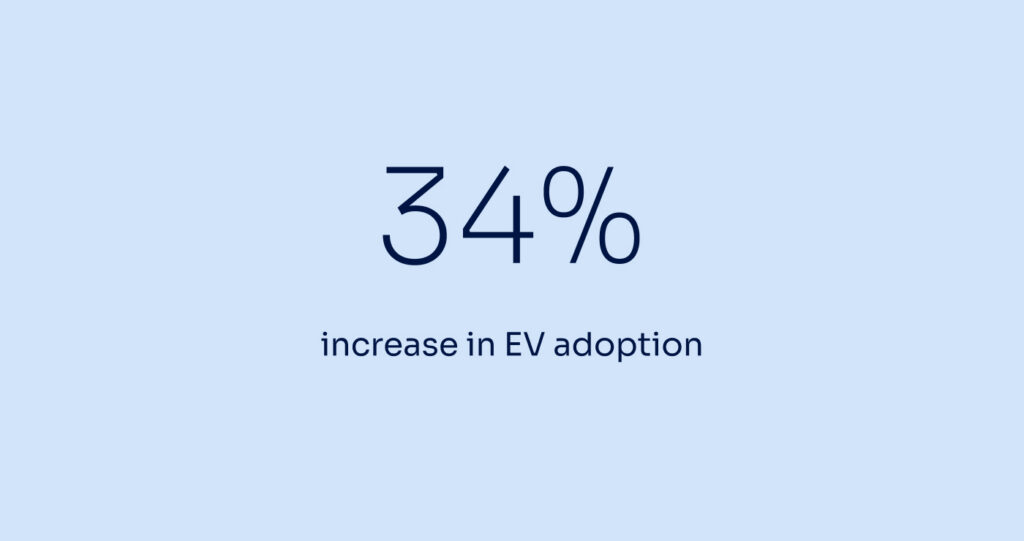
The world’s largest commercial real estate services and investment firm has committed to achieving net-zero carbon emissions by 2040. This ambitious goal encompasses emissions from their operations, the properties they manage for investors and occupiers, and their supply chain. In line with this commitment, the firm aims to electrify their global fleet entirely by 2035. Partnering with Wheels, their global electric vehicle (EV) transition strategy focuses on significantly reducing emissions and optimizing route efficiency, thereby benefiting the communities where they operate.
Strategy: Dedicated EV Team and Comprehensive Approach
The firm’s dedicated EV team in the United States adopted a thoughtful change management approach to ensure a smooth transition for all internal clients. Key initiatives included:
- Focus on Driver Experience: To generate driver enthusiasm, the transition prioritized route compatibility to minimize behavioral changes. Operational impacts were minimized through individualized attention to charger installations, vehicle transportation, and equipment storage. Regular check-in calls were held to gather driver feedback and address concerns.
- Powerful Partnerships: Collaboration with vendors enabled the provision of free home chargers, installed by certified electricians, with the electricity costs covered by the firm. Partnerships with leading vehicle manufacturers, such as Ford, General Motors, Nissan, Tesla, Toyota, and Volkswagen, provided a diverse range of vehicle options.
- Cost Management: To manage costs, the firm strategically prioritized vehicles eligible for government rebates.
Results: Significant Emissions Reductions and Cost Savings
In the first ten months of this transition, the firm is on track to reduce greenhouse gas (GHG) emissions by over 100 metric tons and cut fuel costs by over $35,000. This achievement was realized without compromising driver satisfaction and by leveraging incentives to virtually eliminate the cost premium of transitioning to EVs. Through their partnership with a fleet management company, the firm has made significant strides towards their 2035 goal of 100% fleet electrification.